In the Media · NewsNation Live
Doug Fierberg on NewsNation: what the Cornell case says about fraternities
On NewsNation Live, Doug Fierberg said the Cornell case is about more than one night. It is about fraternities that manage themselves, and a university that does not tell its students the risks.
Watch · Starts at the interview,
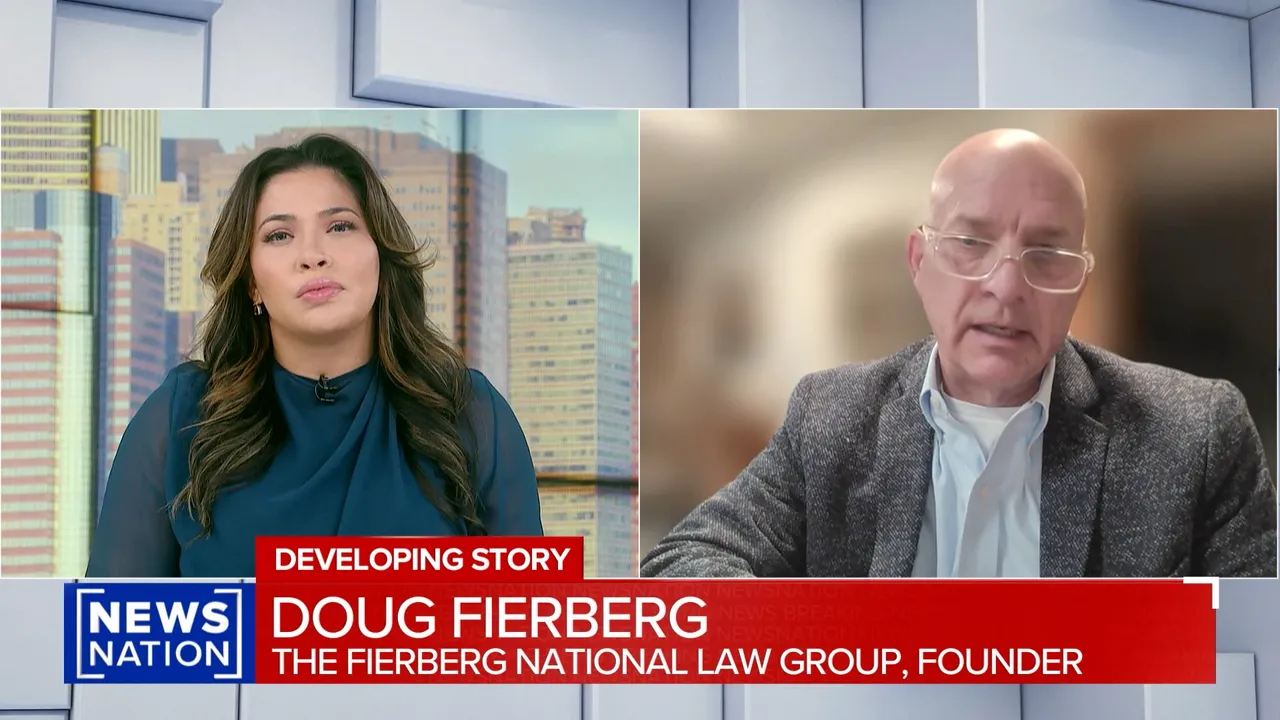
Most coverage of the Cornell case has focused on one night in the Chi Phi house in October 2024, and on why no one was charged. After New York’s governor handed the investigation to Attorney General Letitia James, NewsNation Live’s Alicia Nieves asked Doug Fierberg what the survivor, known in court papers as Jane Doe, should keep in focus.
His answer: the system around the fraternity.
Cornell had seen warnings before. In November 2022 it suspended fraternity parties after students reported being drugged and a sexual assault was reported. By 1986, insurers ranked fraternities a worse risk than hazardous waste disposal companies. And chapters still run their own houses: teenagers managing alcohol and drugs they cannot legally have, with no trained adult living in.
Doug pointed to the group chat as the clearest example. A message went to a Snapchat group of dozens of Chi Phi members that night, and no one stepped in to stop what was happening.
He also explained why drinking does not settle the question of consent. When someone is plied with alcohol and drugs, whether they could still agree becomes a question of fact, and one the police should have investigated.
Transcript
The full conversation.
Here with us now is Doug Fierberg, the founder of the Fierberg National Law Group and has been representing victims for more than three decades in court. Doug, looking at all of this, and as someone who represents sexual assault victims, what advice do you offer, would you offer to Jane Doe in this case, as the case now picks up even more national attention?
Well, my advice would be to continue the focus on something that much of the media is ignoring at this point, which is the national fraternity and the way fraternities are managed on college campuses, particularly Cornell. So even as we're talking about Cornell and what it says it's going to do, the nation doesn't know that two years ago, there was a temporary ban on all fraternity parties at Cornell because of six incidents of drugging and one sexual assault, two sexual assaults, and six days in fraternity houses.
Fraternity houses are ranked by the insurance industry as being as dangerous as toxic waste dumps. Think about that for a minute. On college campuses, including at Cornell, you have a toxic waste dump, and Cornell refuses to inform students accurately and timely about the risks. So even if you look at its investigation that it did in the presidential report, it misleads the public again because it misuses its statistics so it doesn't have to tell the community that sexual assaults on its college campus are more than six times more likely to happen in a fraternity house than anywhere else on campus.
And until that becomes clear and universities change their relationship with fraternities and their willingness to lie about them, it's not gonna get better.
What would you like to see happen then with that information? Because I, you know, last hour I was talking to Gloria Allred. And one of the things I mentioned there, and one of the things that she talked about was how this is bringing up, you know, past stories that people lived through in college. And for me, when I was in college, I was in a sorority. I knew there were certain fraternities that had kind of a reputation.
We would have a conversation with my sorors about, you know, when we go to a party, stick together, don't go in rooms by ourselves. We were very aware of the risks that were at some of these parties and events. So with that information you mentioned, what do you want to see happen to change that environment?
Well, that environment first has to address this issue of self-management. And so one of the circumstances inside fraternity houses is that they have the access to alcohol and drugs. They're self-managed. So you've got 18 and 19 year olds managing substances they're legally not allowed to consume. There's no trained live-in management that's governed by the Department of Housing.
For the university so you've got these circumstances where you can isolate women and then you can sexually assault women and that's why it continues in fraternity houses as a primary location so. universities like Cornell when they're making their recommendations and they're putting window dressing on about more education and more sort of insights as to what causes sexual assaults has to address the question in fraternities that has failed for decades that this concept of self-management of student housing fails time and again.
And that's why this industry, one of the reasons why it's unable to get commercial insurance. Think about that too. You've got organizations so dangerous on college campuses, the commercial insurance industry will not indemnify them.
That should be a major red flag for sure. Speaking to this case specifically, when you look at the evidence that we've seen so far and all that has come out, what prevented local police from previously filing any charges against these accused attackers? And do you suspect that Cornell mishandled this investigation as well?
As to the latter question, absolutely yes. As to the first issue, you know, New York has a law that is focused on the voluntary consumption of alcohol. And if there's voluntary consumption of alcohol, then perhaps you can't raise the issue of lack of consent. But if you take a look at what this woman's, the survivor's statements were, is that she was being plied with alcohol and drugs.
So that at some point in time, sure, maybe the first drink is consensual maybe the second is consensual but when you're plying somebody with alcohol and drugs at some point in time it becomes a factual question as to whether or not there was actually valid consent given and that's an issue that should have been dealt with by the police should have been transferred to a regular police trained agency in Ithaca so that the police agency for Cornell was not investigating what role, if any, and exposure Cornell was going to have.
Because Cornell hides that information. So when the fraternities were temporarily banned two years, three years ago, you can't find that information on Cornell's public information on its website. The suspension of Chi Phi from the fall during the investigation doesn't tell you why they have an interim suspension it just tells you about the awards they've received so nobody on Cornell's campus prior to this incident blowing up with a civil lawsuit could have even found the information about Chi Phi and its history.
And that's not even considering the deaths. There's been two deaths in Cornell fraternities, and you can go on its website right now to find out in hazing whether or not hazing is dangerous. And Cornell will say, we don't condone hazing, of course, because it's illegal. We don't condone sexual assault. Of course, it's illegal. But do you timely and accurately advise your community about these risks because it happens at Cornell?
Let me ask you a little bit more about some of the messages that have come out in this case. There's certainly been that Snapchat group that's just been atrocious to try and read through some of the messages, kind of inviting other men who were in the fraternity to come to this room. Upwards of 50 men were on that chat to potentially assault this young woman. On the other side, we've also been showing some newly revealed text messages showed Jane Doe said that none of this stuff was illegal in terms of what happened to her as this potential investigation leads to a potential case here.
What's your reaction to these messages and how that could steer the direction of this investigation?
Well, let's start off with this first message, which. is outrageous that goes to 50 individuals in the fraternity house. Within the concept of self-management, of the risk of injury, sexual violence, and death within the fraternity house, do you think there's any better example of how self-management doesn't work? There wasn't a person within that 50-person group to step up and say, I'm going to take responsibility, go and investigate, and stop whatever madness is going on.
No better example. Now, with conflicting reports, yes, there are often conflicting reports about what has happened and whether or not someone was grossly intoxicated or whether or not someone was able, you know, to make rational judgments. I do know in the statement that was, she did provide initially to Cornell, as she said, she was 100% sure that she was raped. And that's her putting it all together in her mind, knowing exactly how much alcohol she'd been plied with, how much drugs were used, how disabled she was, how much pressure she was on, and how these men were stationed around her and compelling her to consume alcohol and drugs so they could get what they wanted.
So yes, it's a triable issue of fact. And, you know, it's not always a clean situation. And guys who are going to rape women are not entitled to like a healthy victim. They're not.
And I think the one of the big things about this case is the fact that there wasn't a thorough independent investigation by the DA to get down to those nitty gritty details and really determine whether she was, you know, listen in this or whether she agreed to this or whether she was intoxicated beyond the point where she could have had any form of consent. I think that's what's happening now according to the Attorney General, Ms. James, and Governor Kathy Hochul, who has appointed her. We will continue to follow this story as it has just so many rippling effects.
It's stirred a conversation around the country about issues like Greek life, about parents having conversations with their young boys when it comes to consent. We'll continue to follow it, but really appreciate your time. Doug Fierberg, founder of the Fierberg National Law Group. Really appreciate your perspective. Thank you.
You take care. Thank you.
All right.
Were you harmed at a fraternity?
Sexual assault, drugging, hazing. If it happened to you or your child, talk with us. Case reviews are free and confidential, and the firm represents survivors and families nationwide.